DT50W-20 Cell Testing Supply Check
DK Tester DT50W-20 helps a battery tester manufacturer or battery testing equipment supplier frame lithium cell charge-discharge testing, balance maintenance, and inquiry details around the listed machine.
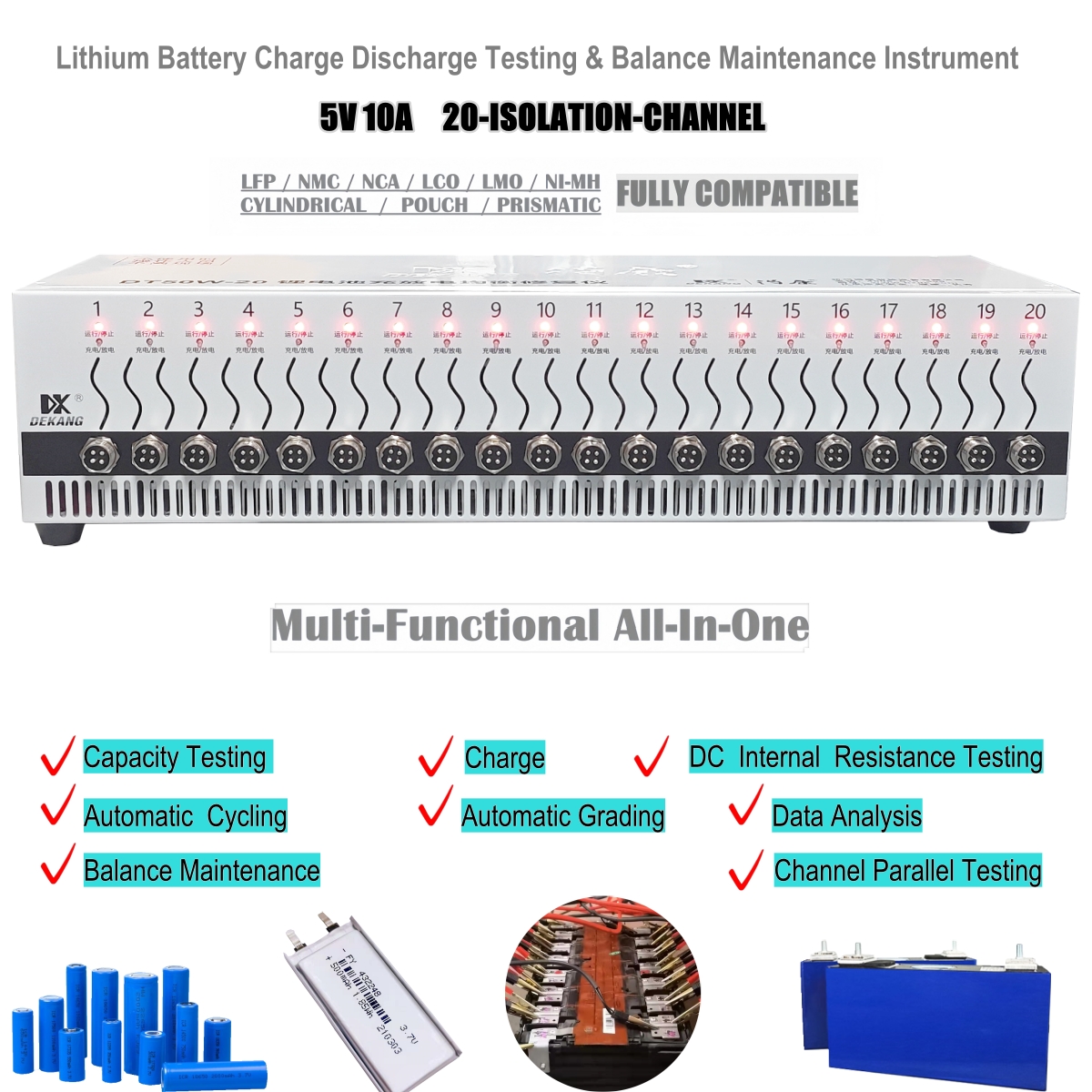
Cell Test Window
Use the visible model facts to define the working window before comparing battery tester terms, related machines, or inquiry details.
20 Channels
The product name identifies a 20-channel machine for cell-level charge-discharge testing and balance maintenance planning.
5V 10A Range
The listed constant-voltage and current values help buyers filter whether the unit belongs in a cell testing workflow.
Cell Chemistry Scope
Li-ion, polymer, NiMH, and NiCd battery cells are named in the visible product details.
Online Operation
The operation method is listed as online communication, making data workflow questions part of the inquiry.
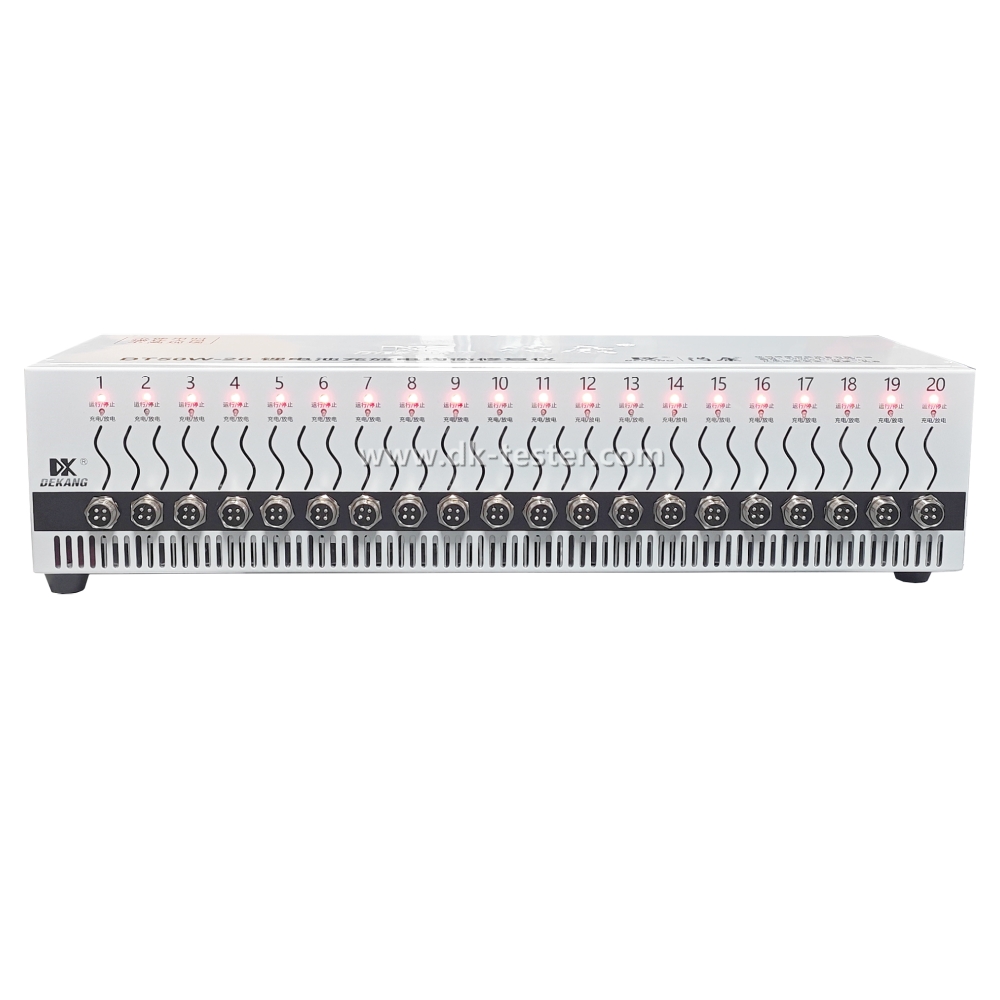
Specification Lines to Keep in the RFQ
Keep the inquiry anchored in the exact DT50W-20 wording so voltage, current, channel count, and cell formats stay clear.
| Full listing name | 20-Channel 5V 10A Lithium Cell Charge Discharge Testing and Balance Maintenance Machine DT50W-20 |
|---|---|
| Item No. | DT50W-20 |
| Product wording | Battery grading equipment, battery balancer tester |
| Input power | AC200V-245V 50/60HZ |
| Applicable cells | Li-ion / Polymer / NiMH / NiCd battery cells |
| Voltage and current | Constant-voltage range 1V-5V; current output 0.5A-10A |
Balance, Cycling, and Data Boundaries
Battery-testing language becomes clearer when each term is tied to a task instead of stretched into an unsupported result.
Balance Maintenance
Use this term for cell consistency and balance-related work; do not turn it into a promise that damaged cells will be recovered.
Charge-Discharge Cycling
Use this term for managed charging, discharging, rest steps, and repeatable test sequences within the listed equipment range.
Data Interpretation
Capacity, internal resistance, grading, matching, and comparison results should be discussed with fixture, cell format, and workflow context.
Related Testing Equipment Routes
When DT50W-20 is one option in a wider equipment review, these DK Tester product pages provide adjacent routes with their own images and details.
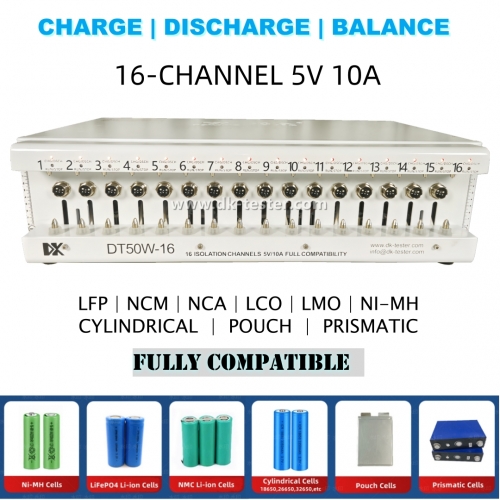
Li-ion Cell Grading Tester DT50W
For buyers comparing a Li-ion cell grading tester around voltage, capacity, and internal resistance testing.
View product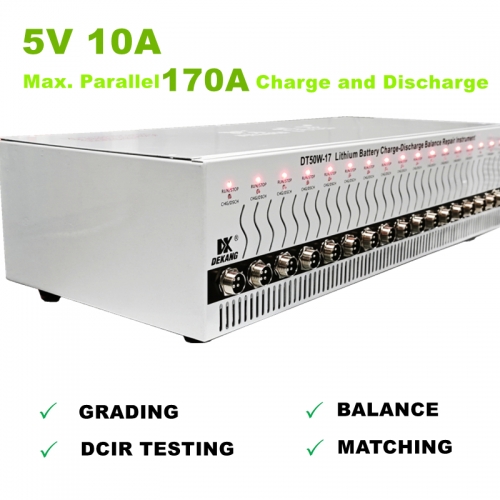
Li-ion Cell Tester DT50W-17
For teams comparing another DK lithium-ion cell tester in the same testing equipment family.
View product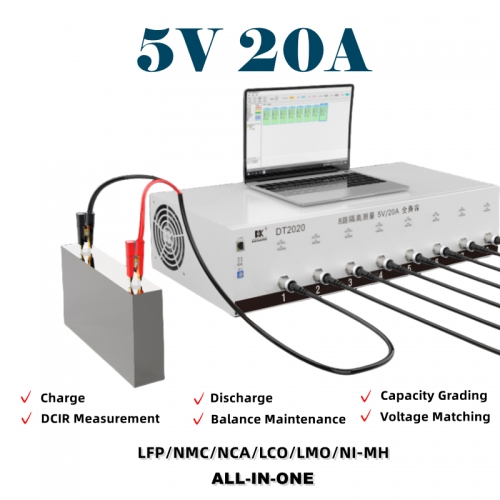
Lithium Cell Tester DT2020
For inquiries that need a different Li-ion cell testing route before specifying final channel and current needs.
View productReading Paths for Tester Selection
These DK Tester articles help clarify term boundaries, page signals, and equipment category language before a buyer sends a technical inquiry.
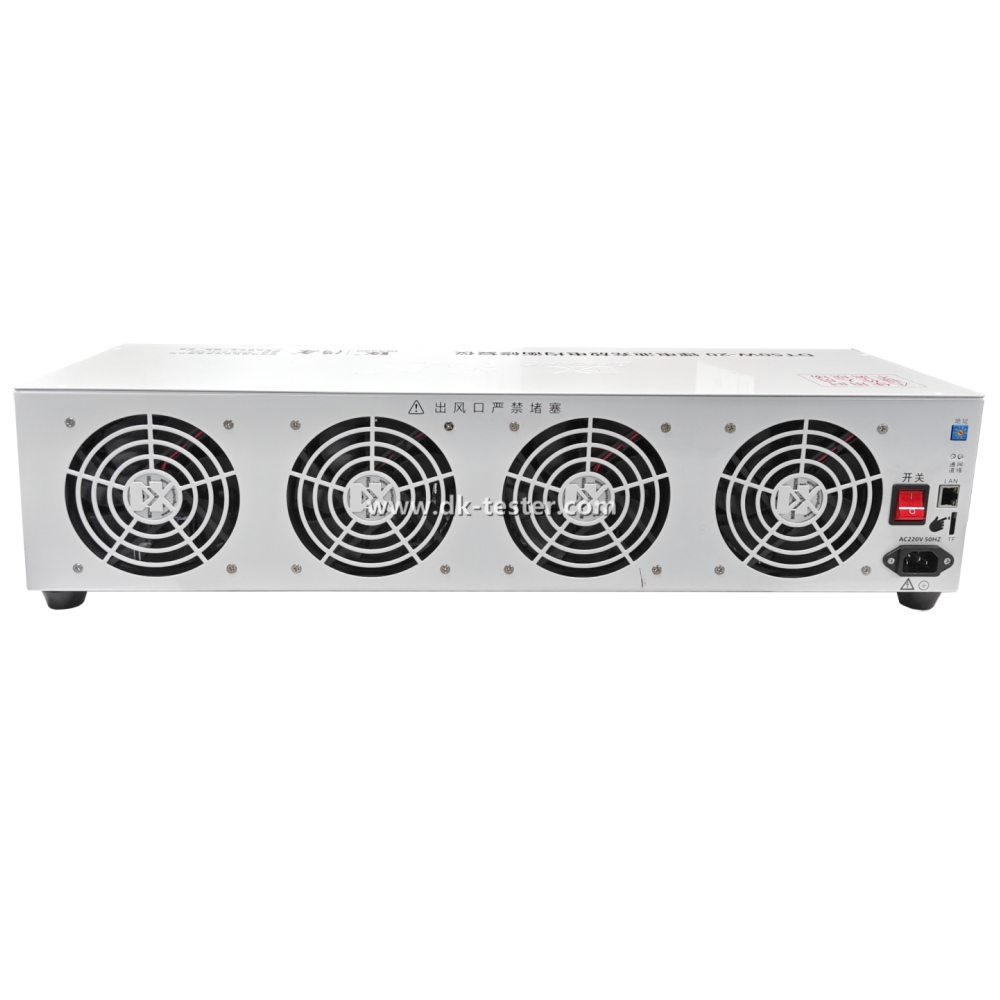
Balancer Tester and Cycler Terms
Use this path when teams need to separate balancing, cycling, and charge-discharge tester language.
Read article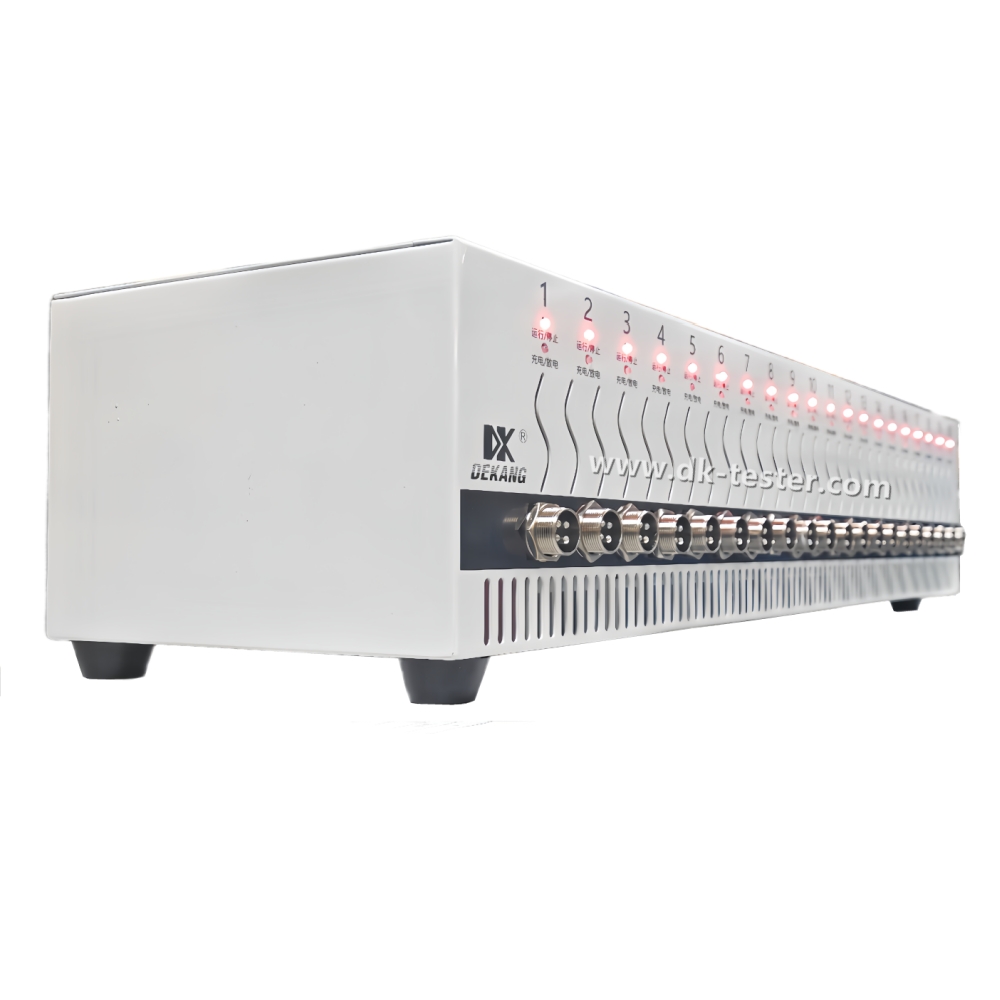
Supplier Page Signals
Use this path to separate model facts, standard references, naming, and commercial page wording.
Read article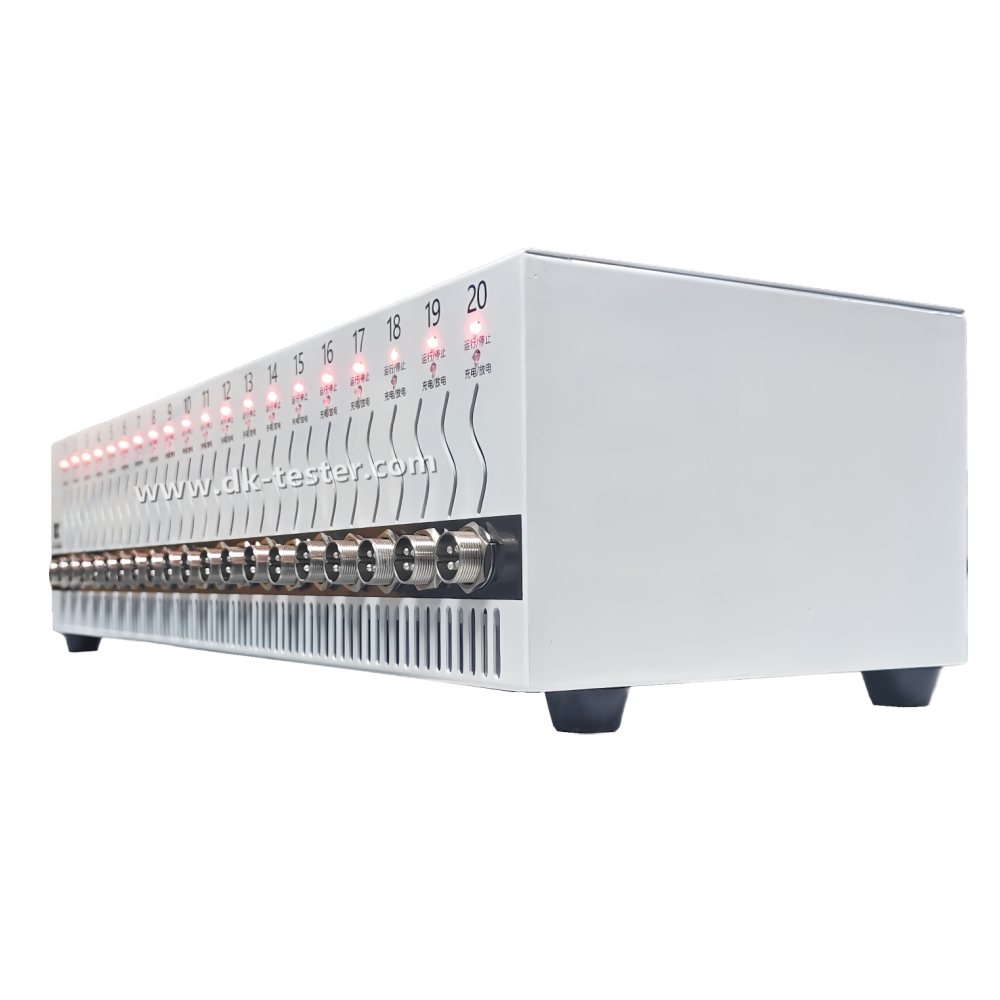
Tester, Cycler, and Analyzer Roles
Use this path to decide which equipment category wording best matches the testing task.
Read articleFAQ
Common technical-purchasing questions for DT50W-20 cell testing equipment review.
What is the DK Tester DT50W-20 designed to test?
The product page positions DT50W-20 for lithium cell charge-discharge testing and balance maintenance, with applicable battery cells including Li-ion, polymer, NiMH, and NiCd cells.
How many channels does the DT50W-20 product name describe?
The listed product name describes a 20-channel 5V 10A lithium cell charge-discharge testing and balance maintenance machine.
Which voltage and current ranges are listed for DT50W-20?
The visible product details list a constant-voltage range of 1V-5V and current output of 0.5A-10A.
What input power should buyers confirm for installation planning?
The product page lists AC200V-245V 50/60HZ input power, so buyers should confirm their workshop or lab power environment before ordering.
Can the page wording be treated as a repair guarantee?
No. Balance maintenance, capacity testing, internal resistance testing, and data analysis are equipment task areas; buyers should not read them as a guaranteed recovery result for damaged cells.
What should be included in an inquiry for this tester?
Include cell chemistry, channel needs, voltage and current range, fixture or holder questions, data reporting expectations, site power, and whether the unit is for production, lab, grading, or maintenance work.